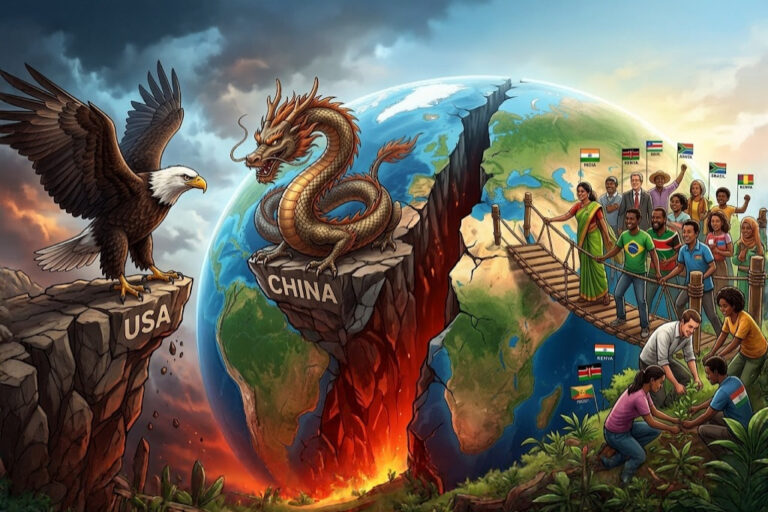
Aid budgets are shrinking. Three-quarters of the drop in recent years came from a single country, the US, which halved its spend on international development, cutting almost all the allocation which didn’t have a political or national interest attached. Germany, Japan, France and UK also cut aid back dramatically, between them accounting for almost all of the decline. Total spend in 2026 is expected to be around $175 billion, down from about $225 billion as recently as 2023.
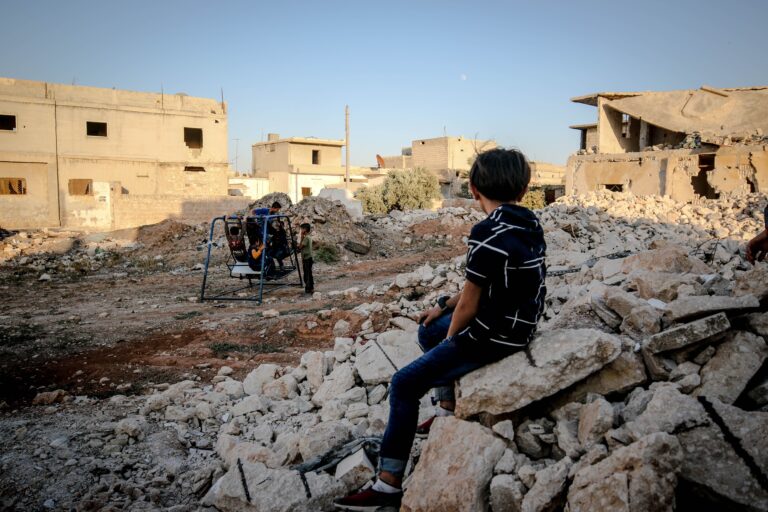
Is this ethical? That, of course, depends on what ‘ethical’ means. But the fall will certainly result in the death of millions of innocent people who would otherwise have lived.
Some of the money saved will have gone on valuable alternative causes. And the reduction in aid may well have hard-to-foresee consequences, such as extra funds for a technology which eventually changes the world, or political change in a poverty-stricken country, which turns out for the best.
But for every valuable alternative cause, there is likely to be an equally valuable benefit of spending the money to save lives in very poor places. People who die because their life-saving aid was cut may have gone on to become world changing scientists, cultural icons, or great humanitarians.
There is a democratic argument for cutting aid, when the voters in rich countries don’t support it. And it’s worth remembering that many tax payers in highly developed countries are themselves poor. It’s almost certain that a few tax dollars, pounds, yen and euros are going from poor people to richer people overseas.
Should aid spend be conducted in secret, or misrepresented to voters and tax payers? Government secrecy can be justified for some things, such as military secrets where an enemy may abuse the information, and complicated science, which might be misunderstood. But international doesn’t fall into this category. Almost all voters understand what international development is, and have an opinion on it. If they don’t agree with it, they need to be persuaded, not lied to.
That, in turn, suggests that an ethical approach to international development would have two elements. First, making aid as effective as possible, so tax payer money has the maximum effect. And second, ensuring the full benefit of this aid is relayed to voters, along with the cost and any other downsides, so they can make an informed decision.
On the first of these, enough research has been done for us to know what works best in international development. Here’s what we know:
Start with context. Not the context in the project document, written by someone who flew in for a week and left with a stack of interviews and a plane to catch. Real context: who actually holds power, who owes favours to whom, and why the last three attempts to fix this exact problem failed. I learned this the hard way in Kosovo, where the formal institutions we were busy building mattered less, for years, than the informal networks nobody had bothered to map. Skip this step, and everything downstream is guesswork dressed up as strategy.
Then there’s how the money is meted out. The old model was rigid: agree a five-year plan, lock in the budget lines, and hope reality behaves. It rarely does. Programmes that can shift resources quickly, chasing the problem as it changes shape, tend to outperform ones frozen in an out-of-date logframe. Flexibility can be the difference between money that helps and money that simply gets spent.
Ownership matters just as much, and it’s the one donors talk about most but practise least. Build a parallel system – your own clinics, your own trainers, your own reporting lines – and you get results while you’re there, and usually nothing much once you leave. Work through existing institutions, however creaky, and you get slower progress but something that survives you. Slow and lasting beats fast and hollow, nearly every time.
Cost-effectiveness deserves more honesty than it gets. Everyone can point to cheap programmes. Genuinely cost-effective ones are rarer, because they require tracking cost per outcome, not cost per activity – and outcomes are harder to fake in a report. A training course that reaches a thousand people for a modest sum looks impressive until you ask how many of them changed their behaviour afterwards. Sometimes the answer is close to none.
None of this works without measurement that’s honest rather than flattering. Not the heaviest evaluation framework available – that just eats the budget it’s meant to protect – but enough rigour to catch failure early, while there’s still time and money left to fix it.
And always, always, have a way out. The best programmes I’ve seen were built with their own obsolescence in mind: a genuine handover plan, not a polite fiction about “sustainability” bolted on at the end because a donor’s template demanded a paragraph on it.
So the formula for cost-effective international development is context, flexibility, ownership, honest costing, proportionate evaluation, and a real exit. What’s hard is doing all six at once, under pressure, with a budget that’s tighter every year and a results framework somebody in a capital city drew up before they’d ever seen the country in question.
Which takes us to the second part of ethical international development, the transmission of honest information to voters about the changes it is making to people’s lives, usually far away.
Its certainly fair for people to be offered a comparison, explaining the alternative uses for a fixed amount of money spent on international development. Almost always, the information will point towards aid as being way to spend the cash.
But sadly, information isn’t enough. We know that people donate money to charities when there is an emotive pull; hardly ever is cold logic enough.
Saying 23,700 lives have been improved by better water supplies has an almost identical impact as saying 16,200 people benefitted. A photograph of children smiling with joy is far more persuasive than either of them.
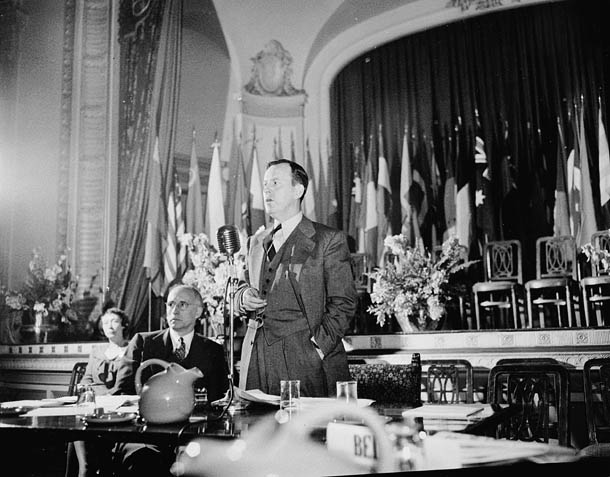
So, how much is it legitimate to play on people’s emotions so they part with their cash, either individually or as tax-payers? I’m not sure. But you can get an insight into what the answer might be taking up an idea from the philosopher John Rawls: if the tax payer found themselves in poverty, how much would they want their former self to be persuaded to donate? Protecting your eyeballs from emotive photographs matters much less than staying alive.
Defining an ethical approach to international development is tough. There are no certain answers, even though some responses are much better than others. Just because we’re not sure what ‘good’ is doesn’t mean it’s not out there to be found.
It is clear, though, that more people are dying today because of decisions taken in London, Berlin, Paris, Tokyo and, most of all, Washington DC. Those decisions may be democratic, but they’re also lethal, and they’re probably not ethical at all.