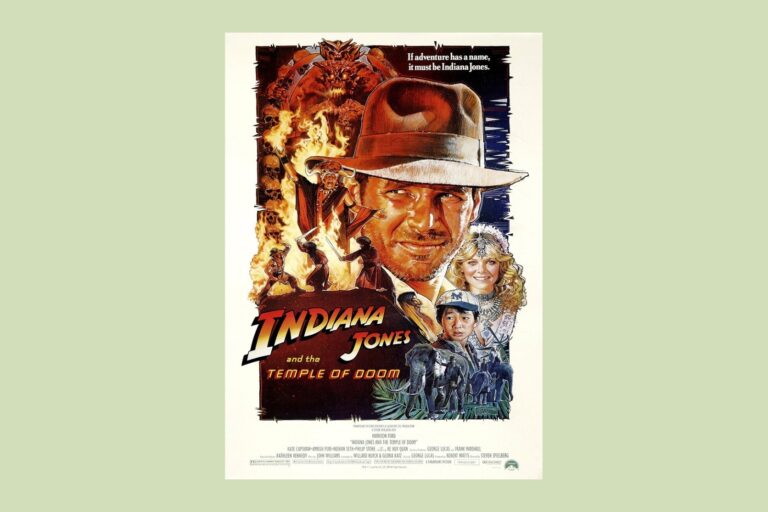
A banquet in an exotic location eating unusual food with dubious characters: it is an iconic movie scene, seared into the memory of anyone who went to the cinema as a child in the 1980s – and probably many more who have seen re-runs in the decades since.
In the second film in the Indiana Jones franchise, the hero is invited to eat the local delicacy of chilled monkey brains. Although he makes an unlikely diplomat, Jones is on a diplomatic mission: he represents the parents of children whom he suspects – correctly, it turns out – are held captive by his host in his ‘Temple of Doom’. Jones doesn’t want to offend the local chief, the ‘Kali’, but neither does he want to eat the monkey brains. What should he do?
Indiana Jones’s predicament is an exemplar of many diplomatic dilemmas: should an envoy respect or reject a local custom which makes them uncomfortable? Should they risk upsetting their interlocutor, or suffer something distasteful to seek favor with them? When should a diplomat stand on principle, and when should they flex in the wind?
There are professional answers to these questions, and diplomatic academies around the world provide training for them. Many would start by suggesting Indiana Jones should dress more smartly and be more polite.
But these issues also reach beyond diplomacy as a skill, into the philosophical. They are about what diplomacy is, and what it is for. They are about how we cope with the confrontation of cultures. They are about what we stand for, and what we try to do. To be a serious diplomat requires an understanding of them.
In the 1984 movie, while Indiana Jones is repelled by the cuisine, his co-star, Willie, played by the actress Kate Caplan, is traumatised. Already appalled by an ‘appetizer’ of soup, in which eyeballs float to the surface, she faints when served the monkey brains. This reaction is a combination of primal disgust and cultural conditioning.
The first of these, primal disgust, has its roots in evolution. Our natural repulsion at eating the brains of another primate probably evolved directly: our ancestors were able to reproduce because they didn’t do it; early humans that did eat monkey brains died out, taking the monkey-brains-are-appetizing gene with them. Like the near-universal disgust at the smell of sewage, and the taboo against incest, there are reasons why humans who baulk at the idea of eating monkey’s grey matter are favored in the evolutionary lottery. ‘Yuk!’ helps us survive.
Cultural conditioning against eating the inside of another primate’s head is more complicated, but there is still an evolutionary link. As humans we absorb the culture of our immediate environment. These cultural norms – such as a shared appreciation of parenthood, and a collective revulsion at murder – generally bestow evolutionary advantages on a community.
Different places nurture different customs. Communities detached from each other and facing different local environments will evolve distinctive positions on what culture should permit. The consensus in one place on polygamy, child marriage, and what to eat will vary from place to place elsewhere. Almost all human cultures seem to share some practices, anthropologists have discovered, but diversity still abounds.
This is important for Indiana Jones as he is served the monkey brain. It means that if his disgust comes from his own American cultural roots, perhaps he should overcome this instinct. After all, local culture in the ‘Temple of Doom’ area may have, at one point, depended on primate delicacies for their survival. Monkey brains may be as important to them as turkeys are to Thanksgiving in the United States.
So, does that mean Indiana should accept the monkey brains as a local custom, and just assimilate? Not necessarily – it’s not that simple.
Imagine that, instead of monkey brains, Dr Jones had been offered the brains of children. This would mean young humans had been killed for his culinary pleasure, the ultimate form of conspicuous consumption. There’s no way our hero could feast on such cannibalistic specimens. Indiana Jones would protest at the cruelty, and probably bring out his bullwhip.
Like Indiana Jones, we cannot jettison our revulsion at the thought of killing children to eat their brains. (If you find someone who can, then tell the police.)
So, why can we accept it might be OK to eat monkey brains as a matter of culture, but we definitely can’t stomach the idea of eating children?
The problem is this: we cannot dismiss our own moral instincts and reactions as arbitrary, or interchangeable with an alternative set of beliefs.
This may seem odd, given that our moral intuitions are rooted in something we know to be arbitrary: evolution, which is the adaptation of a species over time to random factors in the environment. Think about how casually we accept evolution in other settings: rarely do we care whether crows displace sparrows, and if weeds take root amid our flowers it’s just annoying – definitely not a moral issue. But we are a product of genetic and social evolution, and we cannot escape these forces when they apply in a certain sort of way, which generally means things which are close to our own human lives. Darwin was right, but murder is still wrong.
We can, though, place our moral views on a spectrum. This spectrum runs from trivial (how to shake hands) to important (views on capital punishment) to fundamental (genocide is wrong). Where on that spectrum something we perceive as wrong determines how we should respond to it.
So, at the trivial end, like how to greet people, we should copy, assimilate, and revel in the cultural exploration. Foreign dishes with familiar foods are next: different cultures make bread in different ways, and it’s fun to try them out. Since the ingredients of bread are benign, these are all worth trying.
When foreign cuisine involves riskier elements, like raw fish, there may be a case for some restraint, especially if we have a sensitive stomach: not everyone should try sushi. As we move further along the spectrum towards items which differ more seriously from our moral instincts, like eating live food, we are likely to abstain, perhaps pointedly pushing the dish away, while tolerating others who continue with it.
Soon, we move into territory where we try to persuade our hosts and others to stop the activity too. Cruel spectator sports may fit in here. At first, we’d use polite arguments. But further along the spectrum, we’d react even more fiercely, for example by actively trying to prevent something, such as violent actions or murder. At the far end of the spectrum, for the most egregious activities, like systematic mass murder, we should deploy everything we can muster to stop it happening.
Eating monkey brains falls somewhere near the middle of that spectrum – worse than, say, eating horse meat, but better than kicking babies. Indiana Jones should abstain, and explain why to his hosts, but also show some tolerance to people who insist the dish is a tradition with deep cultural resonance.
Diplomats need to go further, though. This is not really a culinary issue, but about something far more serious.
For Indiana Jones, like many diplomats around the world, the stakes are high. Indiana Jones is at the start of an investigation to secure the release of several hundred children. If he offends his hosts, his mission will be over, and the children doomed. The fate of these kids matters much more than whether monkey brains will offend Indy’s taste buds.
Diplomats have a range of tasks, from promoting their nation’s interests, to trying to change a nations policy on a key issue – like climate change or treatment of a minority – to trying to negotiate an accord or understanding which benefits the whole world. In the most extreme cases, diplomats prevent wars to save many lives. All of these objectives – the ends – are worth achieving. If the means is simply putting up with unpleasant food, then they should be done.
Do the ends justify the means for Indiana Jones in this way? If the ends were the release of a thousand children from slave mines to their loving parents, and the means were simply eating one monkey brain, then the answer would be yes. But, in the movies as in life, the real situation is more complicated.
Ends may justify means in theory, but much less often in practice, and it is in recognition of that fact that the phrase ‘The ends justify the means’ is so often disdained. Hardly ever is the connection quite so direct: Indiana Jones cannot be sure that eating for brains will mean the kids are released, nor is it the only way he can help the children.
Also, both the means and the ends are more complex than they appear. If he eats the monkey brain, Indiana Jones may inadvertently condone monkey farming. He would also be acknowledging the legitimacy of the ‘Temple of Doom’ hierarchy – an establishment which incarcerates children and performs ceremonial killing.
Indiana Jones cannot know all the consequences of what he does. In the movie, when Indiana releases the children, he also effects regime change, which turns out to be a good thing. But it might be bad – there could have been a sequel in which one of the freed children turns out to be an evil genius or a genocidal dictator.
Consequence-based thinking is complex and uncertain, and involves making assumptions about unknowable facts. That is one reason why diplomats like Indiana Jones needs principles, and Dr Jones often allows himself to be guided by them.
Jones is committed, for example, to the principle that artifacts belong in a public museum rather than a private collection. It’s a good rule, even though putting an artifact in a museum may be bad occasionally – for example, if the item turns out be explosive or infectious. Similarly, Indiana can go with the principle ‘Eating primate brains is wrong’, whether it frees the children or not. It could even demonstrate his moral fiber, elevating the Kali’s respect for him, and help him release the enslaved kids.
Every decision a diplomat makes – and this applies to Indiana Jones, too – can be weighed as right or wrong, good or bad – at any place along the decision-making process. There is a line which runs from the character or motive behind a choice, to the deed itself, to the consequences it brings about, and all points on that line offer a valid place to make moral assessment.
The trouble comes when making moral judgements at different points along these lines leads to different verdicts. This isn’t so much a problem for Indiana Jones, but is can bedevil diplomacy. A diplomat may have a virtuous motive, and achieve a wonderful peace deal, but only manage to do so through lies and double-dealing. Is it better to be a cynical and nasty diplomat who achieves the same peace deal but also manages to tell the truth? Or perhaps an envoy has saintly virtues, and is absolutely honest, but it means the peace deal fails?
Virtues, motives, actions and consequences are the main ways of gauging what we do, and there are well developed schools of thought based on each of them. All these schools can offer consistent advice on what we should do – including when we are confronted with a bowl of monkey brain. But, if we recognize all of them have some validity, as I think we must, then we must also accept the verdict will often be messy: good in one way, but bad in another.
We can partially overcome this problem by tuning our moral antennae to the situation. When consequences are certain and important, then that’s probably what matters most – so, if eating monkey brains will definitely free many hundreds of children with few adverse side-effects, then outcome-based thinking is the best way forward (and Indiana Jones should eat what’s in his bowl). Where the upshot of what we do is more clouded, or the options finely balanced, we’re forced to rely on principles, such as the rule we should be polite to our hosts at dinner. Where these provide confusing advice, for example because the politeness rule conflicts with an obligation not to eat primates, we’re forced back on virtue. Good virtues include being respectful, honest, and selfless. Where even our virtues fail to point in a single direction, we can complete the loop by considering which virtues bring about the best consequences. Through an iterative process, drawing on consequences, principles and virtues, and reflecting on the situation at hand in each case, we can come towards the best decision.
This is where a diplomat needs judgement. Judgement tells a diplomat what can be known, how their actions will be perceived, and how their interlocutors can be persuaded. Indiana Jones’ judgement is good: he may not dress like a traditional diplomat and he has a rougher turn of phrase, but he always makes fair judgements about the people he meets and the situations he faces.
Interestingly, none of this judgement is moral judgement. It’s all about understanding what’s true, how the world works, and what will happen. At the heart of all ethical quandaries are question about facts. Sometimes these facts can never be known but, if they all were known, the quandary would no longer be a quandary at all.
The sort of judgement diplomats need is best learned through experience, although some academic subjects, like history, can be instructive. As an archeologist, Indiana Jones is perhaps the ultimate historian, with a professorial understanding of some of the earliest human cultures. In the movies, though, when he’s tested to the limit, with lives at stake, including his own, he doesn’t draw on his academic knowledge, but on intuition. His judgement has become instinctive. He can decide what is right as fast as he can draw his whip. By absorbing an understanding of right and wrong so thoroughly, Jones is the ultimate diplomat – although we should be wary of diplomats and others who think they have similarly well-honed moral instincts, because it’s possible they are over-estimating their abilities, and merely ignoring difficult moral issues.
So, should Indiana Jones eat the monkey brain? In the 1984 movie, we never get to see whether Indiana Jones actually eats the monkey brain or not – we only see the dish presented, and his co-star faint, before the screenplay takes us elsewhere.
If they had extended the scene, I hope Dr Jones would push the bowl away, perhaps with a line like ‘I don’t think we should monkey around’, before he cuts to the chase. But my view is influenced by seeing the rest of the movie, and knowing his polite hosts turn out to be truly nasty people. Indiana Jones ultimately fulfills his diplomatic objective to free the children, but through other means. He sets diplomacy aside, and he is a better ‘diplomat’ for it.
Was he right? Do you think Indiana Jones should have eaten the monkey brain?
If you were Indiana Jones in the Temple of Doom, what would you do?
This article first appeared in a 2020 edition of Public Diplomacy Magazine.