Rich countries have long been asked to set aside 0.7% of their national income to help poorer nations. But as the US and UK abandon this benchmark, should we rethink how much to give as international aid?
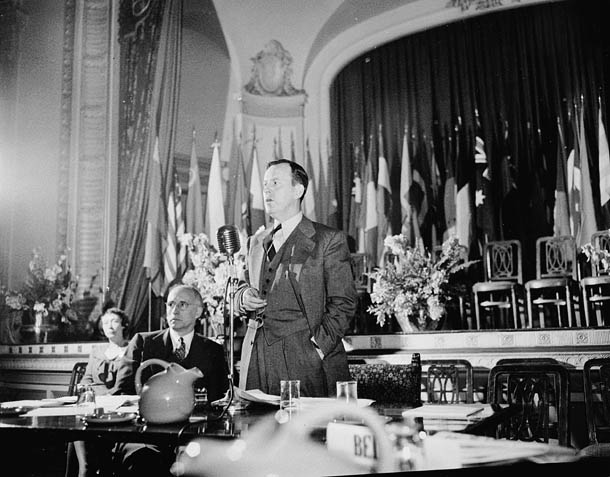
The 0.7% figure emerged more than fifty years ago. A former Prime Minister of Canada, Lester Pearson, arrived at the target after chairing a commission of experts in the late 1960s. He hoped, rather optimistically, that rich nations would increase their international development budgets to that level by 1975.
Adopted by the UN general assembly in 1970, the target was actually achieved by a few nations: Sweden was first to reach it in 1974, followed by the Netherlands (1975), Norway (1976), and Denmark (1978) — the “Nordic-plus” group. They were joined intermittently by France, Finland, Luxembourg, the UK and others. Since 1960, only 15 countries have ever met the target even once.
And several countries are now reducing their allocation to international aid dramatically. In early 2025, under the direction of newly elected President Trump, the world’s biggest national donor, USAID, was all-but disbanded. The dramatic decline in financial support to humanitarian causes around the world has been calculated by The Lancet, a respected medical science magazine, to have caused over 14 million preventable deaths.
But the aid debate was never simple. Although causing deaths is tragically wrong, whose responsibility is it to keep people alive? Aid can create dependency, distort markets, feed corruption, and protect political systems which need to change. Many rich-world governments are tempted to skew aid towards areas which serve their own agendas, such as to reduce immigration or support an ally in a conflict.
And then there are questions about the best form for aid to take. Humanitarian causes, such as feeding starving babies, seems to have the greatest ethical appeal (since, after all, the babies are certainly innocent and would surely die without it). But if giving money to rich farmers in poor countries lifted more people out of poverty, should we do it? And how much does it matter if a corrupt official takes a 10% cut if it means 90% of the aid gets through to save lives?
The diplomatic and political effort to win consensus support for the 0.7% figure more than half-a-century ago was immense. It’s hard to imagine a new consensus arriving in the 2020s for a different figure: most poor countries would ask for more, while many rich countries would make the case for less – or simply ignore any new figure which was agreed.
Which puts the onus back on us. How much should we give to support international development in other countries, and what’s the best way to spend it?
Header photo by Library and Archives Canada / Bibliothèque et Archives Canada, licensed under CC BY 2.0.