The Russia-Ukraine war has been termed the first “Full Scale Drone War,” with millions of drones produced and used by each side each year. More than two-thirds of Russian deaths have been caused by the technology.
Drones are now ubiquitous on the battlefield and beyond, with key roles in reconnaissance, surveillance, strikes, evacuation and logistics. Many now use AI for targeting, and some are capable of semi-autonomous activity. But what are the ethics of drone warfare? After all, drones themselves are not capable of moral decision making – at least, not yet…
There are some benefits to drones: they can lower the risk to human lives by distancing people from danger. Drones and other autonomous machines can replace a soldier risking their life to clear a minefield, reconnoitre enemy positions, or evacuate someone who has been injured. If a drone is destroyed, all that is lost is a piece of equipment; there is no suffering, and no loss of human consciousness or potential. Future combat may involve mostly drone-on-drone battles; and Ukraine has already seen skirmishes between different mechanised combat units, with no direct danger to humans at all.
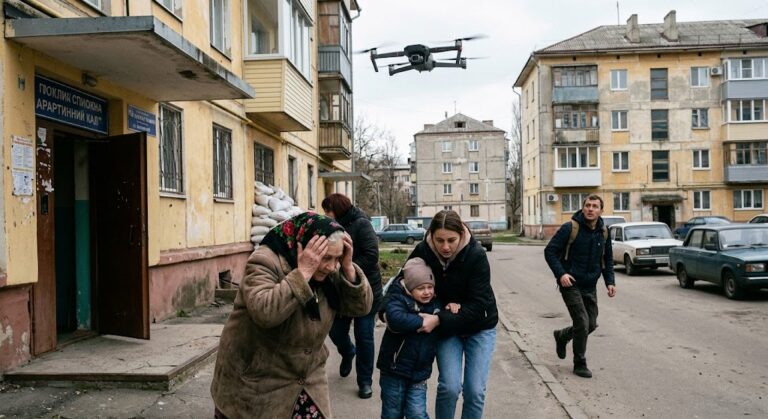
Almost all drones are fitted with cameras or other sensors, which can allow the operators to avoid civilian casualties; missiles and artillery are rarely able to make last-minute adjustments. So, in theory, drones should lead to fewer civilian casualties, and a more carefully targeted use of explosives.
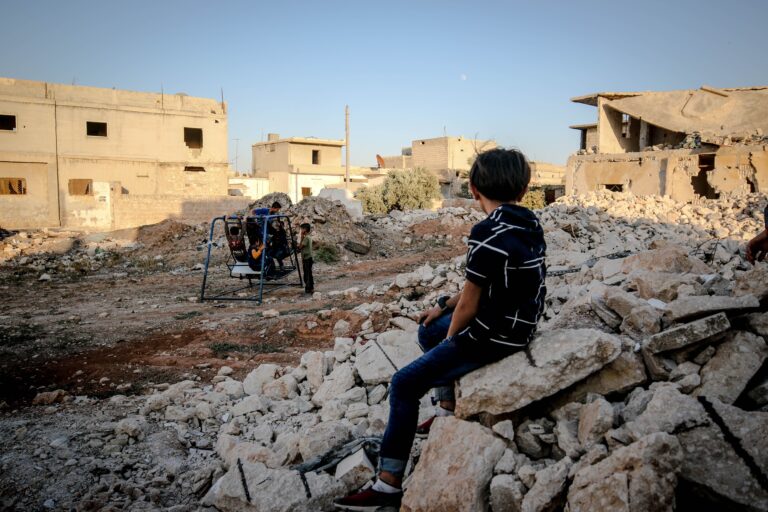
The reality, though, told by the data from several places where the technology has been used, is that deaths and injuries to civilian tend to go up – both in absolute terms, and relative to military casualties. Collateral damage becomes more common, too, and drones make it easier to damage the infrastructure on which many civilian activities depends. In the Russia-Ukraine war, both sides have used drones to target power plants, roads, trainlines, and key logistical nodes.
And there are ethical issues for drone operators, usually guiding their drones from a safe position far away from their targets. Whilst this will exert less psychological strain, it also changes the way they view their prey: someone will seem less human when they are just a target on a grainy screen.
Drones could ‘gamify’ war, particularly if operating systems depersonalise the experience of killing enemy soldiers. Rewarding each ‘kill’ could lead to a lack of restraint. Drones risk making warfare easy, perhaps even ‘fun’, turning operators into people they may not want to become.
Drones raise many ethical issues, and are sure to raise even more in the future, judging by the rapid development of the technology in the crucible of the Russia-Ukraine war.
International organisations may have to take a greater hand in creating norms or agreements to limit or regulate their use. Is the reduced risk to humans worth the depersonalisation of warfare? Can drone usage reduce collateral damage? And can we trust drones to make decisions themselves over who lives and dies on the battlefield?
You may have answers to those questions already, but if an artificially intelligent machines presented a different view, would you accept it?