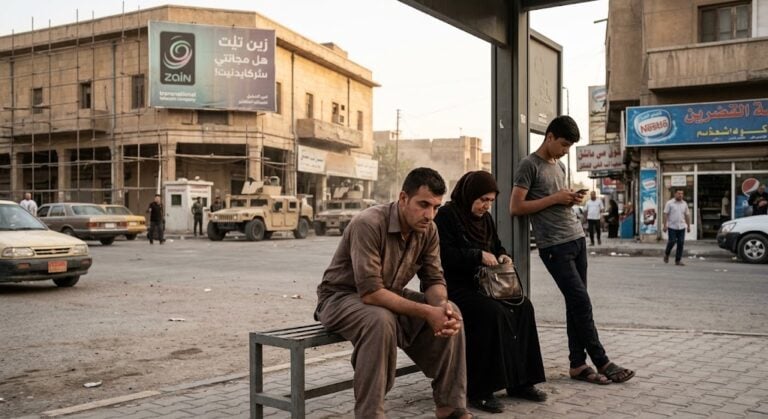
Vice-Admiral Omar Jasim Al Sharooh offers an Iraqi perspective on foreign influence since 2003
For most people in Europe and America, foreign intervention is something that happens on the battlefield. They see TV images of tanks crossing a border, aircraft zooming overhead and soldiers patrolling the streets.
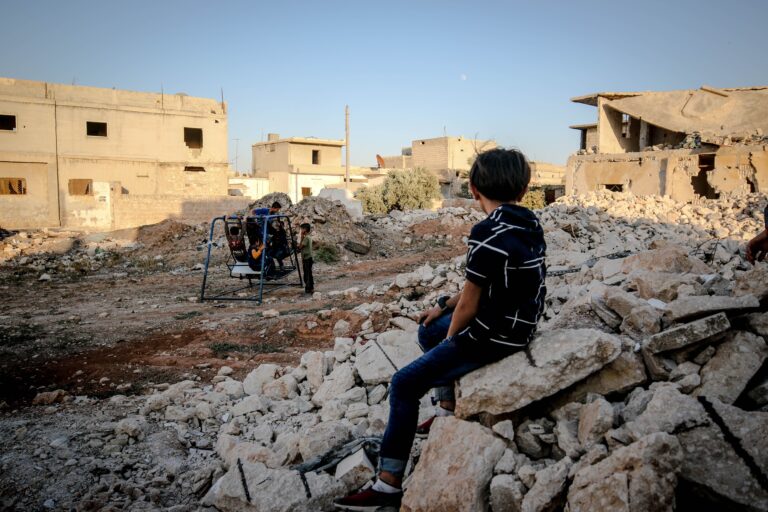
For those of us who have lived through more than two decades of intervention, it has meant something quieter and more lasting. It is about what moves into a country after its state has been broken, what that does to the society, and how it affects the people who remain.
A vacuum by design
Few countries have been shaped by outside forces as much as Iraq. Before 2003, there were wars and more than a decade of sanctions. Although those sanctions were well meant, their main effect was to impoverish ordinary families, while the regime stayed in place. Then came the invasion.
The Coalition said it came to remove a dictator and build something better, and I believe at least some – probably most – of those who came to Iraq from abroad after Saddam truly hoped to achieve that. But its decisions did not leave Iraq healthy or strong. The army was dissolved, the civil service was purged and state institutions were dismantled too fast for anything good to replace them. The result was that Iraq became fragile, and a fragile state does not stay empty for long.
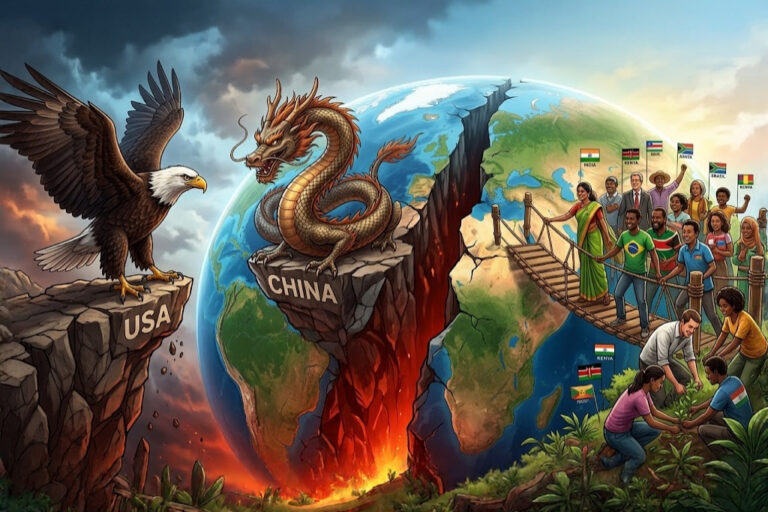
All vacuums of power are filled by whoever is closest and most determined. For Iraq, since we sit at the meeting point of rival regional powers, the process was swift. There were neighbouring states with strategic ambitions, a long history of involvement, and plenty of resources. They saw an opportunity, and they took it. Iraq had almost no institutions able to defend the country’s own interests.
The price of independence
Iraqis understand that real independence is expensive. To be truly independent, a country needs capable institutions, a strong economy, an effective and cohesive army, and a population that trusts its government. Iraq had lost almost all of these. Without them, independence dissolved into a slogan rather than a reality.
Foreign interference has touched every part of our national life. But if I had to name the single factor that allowed it to take root, it would be corruption. Outside powers did not need to conquer Iraq. They needed only to find people inside the country who wanted money and power more than they wanted a sovereign Iraq. There were plenty of these people. Corruption attracts foreign influence just as foreign interference brings on corruption.
When loyalty moves elsewhere
What may surprise readers in Europe and America is just how deeply this reaches into society itself. When patriotism and confidence in the state are weakened, other loyalties fill the space. The shock of invasion, collapse and civil conflict made Iraqi society lose its sense of direction. People still needed protection, jobs and a sense of belonging. When the state could not provide them, others offered them, at a price.
You can see the consequences everywhere.
In institutions. In many organisations, it matters less what the organisation does than who leads it. Always, the top position in an institution must go to someone from the “right” side, and each side looks to a particular foreign patron. Appointments become a map of external influence rather than a measure of competence.
In the economy. When a neighbouring country dominates our markets, it shapes what we produce, what we import, and where the money goes. The Iraqis given authority over trade and contracts often owe their position to that same influence; it means economic dependence and political dependence reinforce each other in an unbreakable loop.
In our homes. This is perhaps the most painful part. Foreign influence does not stop at the front door. Brothers argue, sometimes bitterly, because one believes his future lies with one foreign power and the other believes it lies with another. Families that survived dictatorship and war are divided by loyalties that were never in Iraq before.
In the street. Many Iraqi cities have large portraits of foreign leaders on walls, billboards and lampposts. For a country with such a long and proud history, it is a strange sight to see another nations’ figures displayed as if they belonged to us.
Influence without soldiers
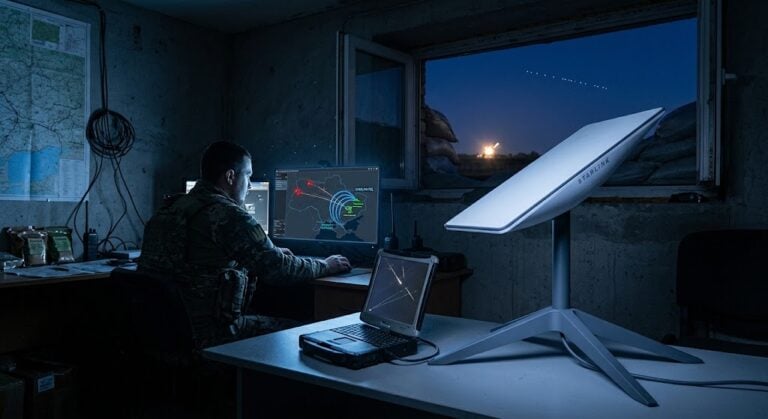
The past twenty years have shown that foreign control no longer needs an army. It can arrive through a chain of innocent-looking steps: open markets lead to trade, trade to investment, investment to contracts, and contracts to control over energy and finance. Foreign finance leads to employment by a foreign power, and that leads to political loyalty. By the end of each chain, a foreign power can shape decisions in Baghdad without a single soldier raising a rifle or crossing the border.
Influence of this kind is much harder to resist than an invasion, because it is harder to see. An occupying army is visible and can be opposed. An electricity contract, a banking arrangement or a network of employment is part of daily life. It becomes normal, and what is normal is rarely questioned.
Silence or exile
What is it like to live in this environment? For most Iraqis, the honest answer is that it presents two options.
The first is to see everything and say nothing. People who take this path withdraw into a private inner world, keep their head down and try to protect their families.
The second option is to leave, to escape to another country so that you no longer have to watch Iraq lose itself, or take part in its disempowerment by foreign hands.
Neither is a real solution. Silence lets the vacuum stay filled by others. Exile drains Iraq of the educated, capable and patriotic people vital for its future. Yet most people choose one or the other because they feel that one person, alone, cannot change anything. We have lost our sense of agency.
That feeling is the deepest damage foreign intervention has done. Buildings can be replaced by new constructions, and economies can bounce back. But Iraqi society has now lost faith in its own ability to decide its future.
If Iraq is ever to fill its own vacuum, it will begin when Iraqis believe again that their country belongs to them, and then act as though it does.