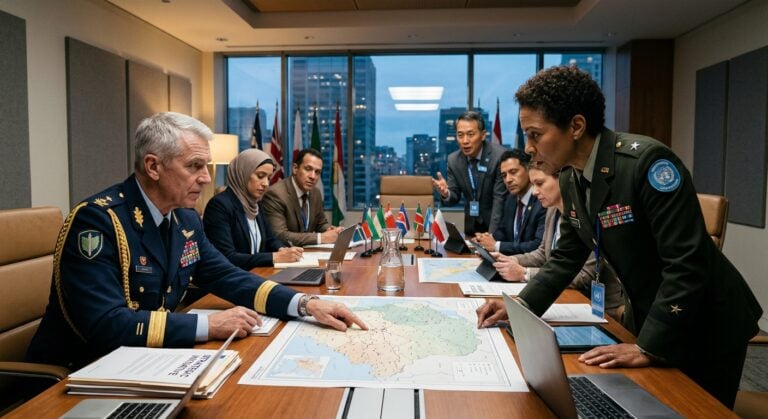
Ethics are vital for geo-strategy, and one of the reasons the West is adrift is that ethics are scarce. Not just tactical ethics, as taught in defence academies to mid-level officers, often as an optional module. Nor is this about rules of engagement, or referring every targeting decision to a legal advisor. The West must implant ethics at the centre of our grand strategies. A clear moral philosophy must resound from every national security and defence document. We need strategic ethics.
Why should we be ethical? The case is self-evident: it’s good to be good. It’s always right to do the right thing. Those tautologies invite the follow-up, ‘So, what’s the right thing?’ to which there are several plausible responses. British Foreign Secretary Robin Cook called for an ‘Ethical dimension’ to foreign affairs centred around human rights. Several Nordic countries emphasise international law and multilateral institutions. The late Joseph Nye suggested seven criteria to determine how ethical a US administration had been on international affairs, spanning the intentions, means and consequences of their foreign-facing decisions. Nye also showed that strategic ethics are not an alternative to pursuing national interests; rather, it is about how leaders choose to define those interests.
For strategic ethics, what matters is that our discussions are framed around right and wrong. That, in turn, rests on near-universal values: sincerity over hypocrisy; honouring promises made; sympathy for those in need; respect for others; and justice for those who harm others without cause. The balance of those values may evolve, and there will be trade-offs – that’s all for debate. But it is a debate almost wholly absent in most foreign policy discussion. Except, that is, when it is being parodied and ridiculed, for example recently by US Secretary for War, Pete Hegseth.
Experts in diplomacy and defence who still focus on their narrow and immediate interests – personal or national – should accept a more ethical approach brings colossal instrumental benefits. There are four main reasons why. Ethics are essential for winning wars; ethics can win over allies; they are vital for an effective peace; and ethics reminds us why it’s worth fighting in the first place. Let’s take each of those in turn.
People fight for many reasons – for money, to protect the friends they trained with, or simply because it’s their job. But how hard they fight matters hugely: some troops keep their heads down, some run away, while others fight to the last bullet, taking as many of the enemy with them when they go. In words often attributed to Napolean, ‘In war, the moral is to the physical as three is to one’.
The central importance of fighting a ‘good fight’ is most important at the strategic level. The greatest political leaders in wartime, including Lincoln, Churchill, and Zelenskyy, were able to mobilise huge portions of civilian society to their cause by persuading citizens of the justice of the fight. In both democracies and non-democracies, people contribute much more to the war effort if they believe it is the right thing to do. Ethics are essential for winning wars.
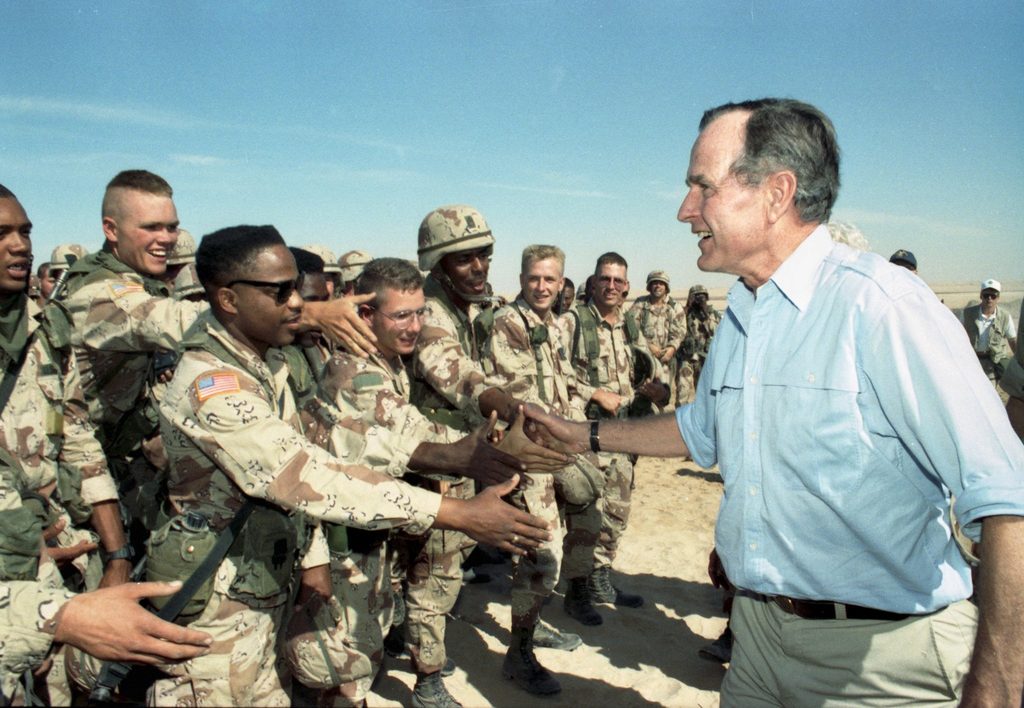
The second reason we need strategic ethics is that they allow an alliance to form around clear principles. With a compelling moral cause, the US was able to lead huge coalitions in World War Two and Gulf War One. Not all coalition partners were ‘good’, but moral clarity enabled both FDR and Bush 41 to corral, respectively, Stalin’s mass armies and President Assad’s Syrian fighters to a worthy cause. Ethics can make bad people do good things.
Coalitions which emerge against a common enemy usually need that enemy to do terrible things before the partnership can form – far better to avoid those horrors by being clear on ethics in the first place. And alliances negotiated through interests are mercurial: nations can be bought off, just as mercenaries can switch loyalties to the highest bidder. Ethics allow a coalition to be ready during peacetime – ideally, able to deter fighting before it starts.
The third case for placing ethics at the heart of grand strategy is that it allows the peace to be won much more easily. Our inglorious record at winning the peace has led some people to conclude that we shouldn’t fight: no more wars of choice. This isn’t viable. Some wars are unavoidable, and for Western language of ‘deterrence’ and ‘lethality’ to be credible, we must be ready, willing and able to fight – and to fight hard.
The problem is that we tend not to think much beyond the battlefield victory. NATO’s latest Theory of Victory against Russia – to ‘Block, blunt, and break’ an attack – doesn’t mention anything about chasing Russian troops back to the Kremlin, or precipitating regime change. Current language on defending Taiwan never mentions the Chinese mainland. It’s as if our planners, neither military or civilian, think beyond the initial kinetic phase – contributing to failure in Iraq, Libya, and now potentially Russia, if Moscow attacks.
One reason for this is that Western popular culture about war still fixates on World War Two, and especially the defeat of Nazi Germany. It was an unusual victory because it was absolute: we destroyed Hitler’s forces and regime, occupied Berlin, and were able to reset German society in our own preferred image. The ghost of Prussian militarism was vanquished, and both new Germanies – East and West – accepted a more legitimate international order.
We won’t be able to do that with Moscow or Beijing because they have nuclear weapons. Assuming we avoid nuclear Armageddon, any war with Russia or China will end in a negotiated peace. The character of that peace will determine how long it lasts, and the next near-peer confrontation which ends it.
Without ethics, victory for the West will mean humiliation and despair for millions in the defeated nations. And when people are humiliated and despair, they can turn to horrifying ideologies – from militant totalitarianism to a myriad of terrorist causes. Ethics, by contrast,
makes it much easier to establish a peace, even over Russia or China. This is because both the victor and the defeated will have a clear view of the new world order, and that order will have an inherent, ethical logic to it. We need to treat a defeated Russia or Beijing as we treated Germany in the late 1940s, not with the humiliation delivered to Germany after Versailles.
The fourth case for placing ethics in the centre of grand strategy is that the default alternative – basic interests – just aren’t human enough. As soon as national interests evolve beyond immediate collective survival, a question arises: whose interests, within the nation, are to be served? For minor wars, this question can be brushed aside – if a military enterprise brings new, taxable commercial profits, for example, the benefits can be shared. Profits, though, are not what life is about, and it would be wrong justify lethal force by the fact it can make money. People live for many different things – from family to faith, from learning new ideas to enjoying luxury. Only with a more fulsome account of humanity can we have a truly effective grand strategy. Subsuming everything into ‘interests’ goes against decades of psychological evidence. It just won’t cut it.
So, are ethics coming into grand strategies?
No. They are almost completely absent from the current tranche of Western national security strategies. The US National Security Strategy of November 2025 is about achieving national interests through the unshackled exercise of power. ‘Soft power’ is portrayed as good only so far as it serves US interests, and it is made contingent on a belief in ‘Inherent American greatness’.
The UK counterpart, also from 2025, is only a little better: it talks of showing ‘Resolve’ to defend ‘Values’, but those values are ill-defined beyond a preference for international cooperation. The document rejects a transactional approach in favour of partnerships, but the test for all international-facing policies is the same: does it promote the national interest?
France also published a National Strategic Review last year and called for ‘Ambitious, renewed and effective multilateralism,’ but, like Britain, this was a way to achieve ends which served the nation. Even Canada’s national security policy, ‘Securing an Open Society’, is about defeating threats to defend the current way of life.
All these policy documents ignore strategic ethics. To be fair to those who draft these papers, strategic ethics aren’t an easy thing to include. Developing them in detail requires thought, debate, and engagement from political leaders. But that’s no excuse for dodging the theme entirely, and settling for ‘national interests’ instead. The absence of strategic ethics is a vacuum which may mean more blood on future battlefields, and a tragically short peace after the next war is won.
Even though the case for ethics is self-evident, many remain unconvinced. Some may point to Soviet soldiers and Taliban suicide-bombers to show warriors can be deeply motivated by unethical causes. Actually, these examples confirm that getting ethics right is vital. Being ethical means there will be no legitimate grievance to feed their hate. It also means we will more easily match their motivations, and so confront them. And aspiring to the moral high ground makes it easier to argue the Taliban and the Soviets aren’t moral themselves.
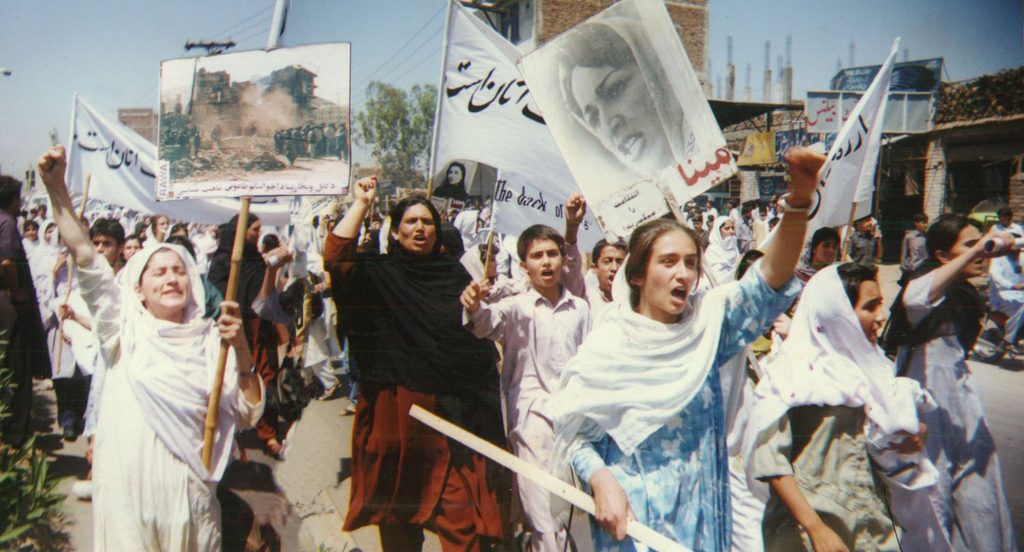
Some may say that ethics undermines deterrence. Perhaps a nuclear adversary would fear us less if we worried too much about hurting others. This is a misunderstanding of ethics. Deciding our ethics in advance of conflict reclaims our agency, and enhances our credibility. Ethical deterrence means adversaries would fear us more: they’d know we’re confident enough to follow through on our ethical deterrent threats.
Some may say an ethical approach to war fighting constrains tactics and operations. This is exactly the argument used to justify torture against terrorist suspects in the early 2000s – a practice which became the greatest motivation for future fighters. The tactical gains are more than self-defeating; they can yield strategic defeat.
Maybe the strongest case against ethical foreign affairs is that, when everyone else pursues self-interest, only a sucker wouldn’t. It’s the prisoners’ dilemma argument, and it’s short-sighted. In law, economics, and society, humans have worked out how to move beyond egotism and selfishness to generate outcomes which turn out far better all round. The path to applying ethics to military and foreign affairs isn’t easy, but it’s worth the journey.
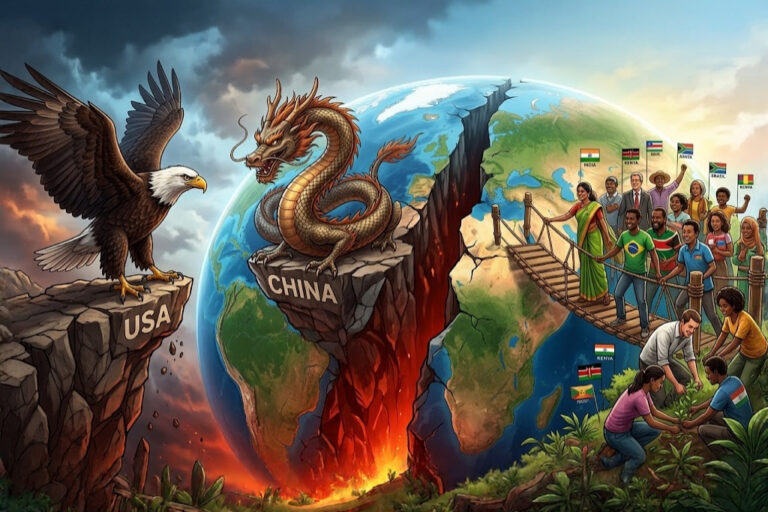
Ethics are essential in every phase of a military confrontation with a near-peer rival. Pre-war, the talk of lethality might deter an adversary, but it’s can descend to bloodlust without a framing of right and wrong. Before and during any near-peer confrontation, ethics will be key to winning over swing states, and their populations – Brazil, India, the Gulf, most African countries – which, between them, hold vital assets. And once the war is won, ethics are vital if we are to persuade the vast populations of Russian or China to replace their militaristic mindset with a more sympathetic approach to the West. Empowered ethics – not raw power – are the most vital component of a durable peace.
How do we empower ethics? To do it comprehensively, the language needs to change, bringing in concepts which may be new to many practitioners. But some steps are straightforward. In place of pursuing commercial gains for campaign donors, the state should seek broad prosperity at home and abroad. Those who made sacrifices for a worthy cause – from interpreters in Afghanistan to Kurdish fighters who defeated ISIS – need to be respected after their usefulness has ended. Ukraine should be rewarded for upholding the vital principle of state sovereignty, not mocked for having a weak hand, or extorted while it’s desperate. National interests need to be widened, for example with a slogan which brings in potential allies. International justice should be supported, not opposed.
The first step is to accept we don’t serve our interests best by trying to serve those interests directly.